The unlikely combo of Takenaka Hanbee and Katakura Kojuurou dance to Cantarella with precision and some very nice camera work. A lot of people have been uploading videos based on this choreography recently and this one by Nowa is my favourite. Whether the pair are representing the tangled story of the Sengoku Basara 2 anime in the medium of dance or simply being pretty is up to the viewer. Thumbs up to the person who cheekily commented "Harenchi de gozaru~!" around 2:20 into the video...
Next, user Kanou Sana puts TETA's gorgeous Date Masamune model into a PV-style take on Rerulili's Roshin Yuukai -melt down- JunK Arrange feat. MARiA.
Friday, 9 November 2012

Thursday, 8 November 2012
Manga review: The Art Of Loving (Renai Koufukuron)

The Art Of Loving (Renai Koufukuron) is a 2001 spin-off based on the 1999 manga Color. While Color was a collaboration between Eiki Eiki and her friend Zaou Taishi, The Art Of Loving was created entirely by Eiki Eiki herself. It focuses on two of the minor characters from the previous story, delving into their pasts to unravel the secret history leading up to certain events in Color.
The sulky Yutaka is a good-looking and popular company heir, while Toono is an artist, friendly and sociable at heart yet often misjudged thanks to his rebellious demeanour and bleached hair.
'Dark' is definitely the key word here. At the start of the story, both men are adults. The narrative sets the tone immediately by cynically questioning the role of sex in romantic relationships and whether you can have one without the other. After a brief introduction to the two male leads,we're taken back in time to show how they met back in high school, gradually leading up to a big revelation which explains how these two young men ended up together. BL manga frequently explores darker themes but The Art Of Loving takes things a step further, slowly relishing the build-up chapter by chapter rather than letting it all out in emotionally-charged dialogues between the leads. Eiki Eiki explores Yutaka's complicated adolescent feelings through internal monologues describing the self-hatred and pressure he harboured inside; feelings which only intensify once he meets Toono.
In the extra material which follows the main story, we see Zaou Taishi (Tsuda Mikiyo) complaining about Yutaka's horrible personality as part of her explanation for not participating in this spin-off. It's true that he's difficult to sympathise with, but I think he's a believable character in spite of this. As an aside, in this translation Zaou is incorrectly referred to as male (she only appears in her teddy bear form, but it's unfortunate that the mistake was made).
Eiki Eiki's art improved a lot prior to her work on this book, and the visuals are great with attractive character designs, unless you dislike her distinctive art style. The dialogue is also great; there are only only one or two moments where the plot isn't quite as tight as it should be. Despite this being in the June 'Yaoi Manga' line and thoroughly earning its Mature Content label, there's very little actual BL on show; nobody does anything inappropriate during the high school flashback which makes up the bulk of these pages.
Sadly, although all of the notes in the book frequently refer to a second volume, no such follow-up ever materialised. The story is unfinished, gradually building up into a climax we'll never see.
I have to make a special note in praise of one of the silly 4koma comics Eiki includes at the end of this volume. She mentions asking her now-famous brother, DAIGO, about a very personal matter in the course of her research. Having now read the story which his answer led to, I'm not sure I can look at poor DAIGO in the same way any more.
The Art Of Loving was published in English by Digital Manga in 2006 and it can still be purchased from Amazon, where it's listed under the wrong creator (it looks as though the writer and artist information was copied from a different book, Sweet Revolution). The book is still readily available at a reasonable price and I think it's fair to say that even though the story was never finished, it's a worthwhile purchase if you're a fan of Eiki Eiki.
Wednesday, 7 November 2012
Streaming: Ixion Saga DT first impressions
This series is weird.
When Ixion Saga DT was first announced, it didn't look as though there'd be much reason to take an interest. It's a generic-looking anime based on an online game I've never played. The rather unoriginal premise is that a spunky young lad ends up trapped in a virtual MMORPG world and has to fight his way through it, making friends and standing around looking hotblooded with a sword.
I hadn't realised at that point that Ixion Saga DT doesn't take itself very seriously.

The DT in the title stands for Dimensional Transfer and it's also the hero's nickname, or at least that's the official story; watching the show it became quickly apparent that the staff are having a lot of fun slipping in cheeky references. I have no idea whether the original game is as silly (it's Capcom, so anything is possible) but DT just happens to also be slang for doutei - in English, that's a male virgin. On its own this might be a coincidence, but the lead character draws attention to his lack of sexual experience on more than one occasion to make it clear that the gag is intentional. Furthermore, the opening theme by the bonkers Golden Bomber is called 'DT Suteru', complete with innuendo-riddled lyrics about discarding your DT (or losing it, if you will). The karaoke subtitles emphasise this by presenting a mundane, made-up set of lyrics with the correct, more suggestive ones written in furigana. The real lyrics in turn somehow make the fake ones sound kinkier than they actually are.

The ending sequence is nothing more than a parade of men in alluring poses, accompanied by another silly Golden Bomber song appropriately called 'Let's Go ED'. ED happens to be the nickname of Erecpyle Dukakis, one of the main villains. Erecpyle is a good-looking man who harbours a seething hatred for the protagonist following a certain testicle-related accident. It's appropriate then that both his name and his abbreviated nickname refer to 'erectile dysfunction'. The episode titles keep things classy with adventures called NK (No Kintama), PK (Pantsu Kuikomu), BL (Boys Love) and HG (Hard Gay?). Of course, all of these abbreviations have official, family-friendly titles, but the double entendre is no accident. The script itself never hesitates to go for the low hanging fruit; jokes about male anatomy are made at every opportunity.
The end result is that the series plays out more like the screwdriver arc in Gintama than a generic fantasy parody should, due as much to the puerile humour as the Monster Hunter references. It also feels a lot like classic Akahori Satoru, even though he doesn't seem to be secretly involved. The characters roster runs the gamut from a traditional burly swordsman (voiced by Nakai Kazuya) to a transsexual maid armed with dual pistols (voiced by Fukuyama Jun). One of the antagonists is played by Sugita Tomokazu to contribute to the Gintama atmosphere, and Kaji Yuuki is also present, of course. Perhaps I should start remarking when I follow a show he isn't involved with.
I'm going to keep watching.

Ixion Saga DT is currently streaming on Crunchyroll, so if you want to lose your DT I recommend taking a look.
When Ixion Saga DT was first announced, it didn't look as though there'd be much reason to take an interest. It's a generic-looking anime based on an online game I've never played. The rather unoriginal premise is that a spunky young lad ends up trapped in a virtual MMORPG world and has to fight his way through it, making friends and standing around looking hotblooded with a sword.
I hadn't realised at that point that Ixion Saga DT doesn't take itself very seriously.

The DT in the title stands for Dimensional Transfer and it's also the hero's nickname, or at least that's the official story; watching the show it became quickly apparent that the staff are having a lot of fun slipping in cheeky references. I have no idea whether the original game is as silly (it's Capcom, so anything is possible) but DT just happens to also be slang for doutei - in English, that's a male virgin. On its own this might be a coincidence, but the lead character draws attention to his lack of sexual experience on more than one occasion to make it clear that the gag is intentional. Furthermore, the opening theme by the bonkers Golden Bomber is called 'DT Suteru', complete with innuendo-riddled lyrics about discarding your DT (or losing it, if you will). The karaoke subtitles emphasise this by presenting a mundane, made-up set of lyrics with the correct, more suggestive ones written in furigana. The real lyrics in turn somehow make the fake ones sound kinkier than they actually are.

The ending sequence is nothing more than a parade of men in alluring poses, accompanied by another silly Golden Bomber song appropriately called 'Let's Go ED'. ED happens to be the nickname of Erecpyle Dukakis, one of the main villains. Erecpyle is a good-looking man who harbours a seething hatred for the protagonist following a certain testicle-related accident. It's appropriate then that both his name and his abbreviated nickname refer to 'erectile dysfunction'. The episode titles keep things classy with adventures called NK (No Kintama), PK (Pantsu Kuikomu), BL (Boys Love) and HG (Hard Gay?). Of course, all of these abbreviations have official, family-friendly titles, but the double entendre is no accident. The script itself never hesitates to go for the low hanging fruit; jokes about male anatomy are made at every opportunity.
The end result is that the series plays out more like the screwdriver arc in Gintama than a generic fantasy parody should, due as much to the puerile humour as the Monster Hunter references. It also feels a lot like classic Akahori Satoru, even though he doesn't seem to be secretly involved. The characters roster runs the gamut from a traditional burly swordsman (voiced by Nakai Kazuya) to a transsexual maid armed with dual pistols (voiced by Fukuyama Jun). One of the antagonists is played by Sugita Tomokazu to contribute to the Gintama atmosphere, and Kaji Yuuki is also present, of course. Perhaps I should start remarking when I follow a show he isn't involved with.
I'm going to keep watching.

Ixion Saga DT is currently streaming on Crunchyroll, so if you want to lose your DT I recommend taking a look.
Tuesday, 6 November 2012
Part 3: Yanagita Rikao's Sengoku Basara Science Laboratory
As with the other posts in the series, this is an extremely rough English translation of the blog series Yanagita Rikao's Sengoku Basara Science Laboratory (Yanagita Rikao Sengoku Basara Kagaku Kenkyuujo). It's not a word-for-word official translation. The series is intended to promote August's Sengoku Basara HD Collection. Please click the link below to see the original article, which is accompanied by illustrations and a promotional video.
Part 3: Godlike speed and a 2.5 million volt electrical discharge!! Katakura Kojuurou
A sword with godlike speed
Kojuurou is a very orthodox warrior who uses a single katana as his weapon. Each swing is very powerful, able to send five enemies flying 10m into the air with one blow. Although the other warlords can do the the same, the key point is that Kojuurou is armed with just one katana. Exactly how powerful is this sword attack?
Extrapolating from the flight distance of 10m, the enemy must have been launched at a speed of at least 25km/h. At first glance it doesn't seem like a big deal; it wouldn't be strange for a person weighing a few dozen kilos to fly like this. Since it is said that a Sengoku era warrior's armour could weigh up to 25kg, I think that it's safe to say that each individual enemy soldier weighs 100kg with their armour and weapons. Five would be 500kg. A katana weighs approximately 1kg. Consequently, the sword is hitting things which are 500 times heavier than it is, and knocking them into the air.
For this to be possible, the sword must be moving 500 times more quickly than the speed it sends the enemies flying. If they're thrown into the air at 25km/h, Kojuurou's sword speed is therefore 12,500km/h, or Mach 10.2. More than 3 times the speed of a rifle bullet! A sword weighs 200 times more than a rifle bullet, so if the speed is 3 times greater, Kojuurou's single blow is 2000 times more powerful than a bullet fired from a rifle. Great!
Special move: Mugetsu Gokusatsu
Even though Kojuurou is stronger than usual under normal circumstances, he can take things further than that. This is his 'Mugetsu Gokusatsu'. When his fury reaches its peak, his fighting becomes ferocious and his sword speed increases. By how much does this increase his attack power?
During play, the sword's speed on-screen is too fast to measure. Looking at the Sengoku Basara 3 Utage Official Complete Guide, a standard attack value of 8 becomes an attack of 12 in the Gokusatsu state. From this, perhaps it can be concluded that his sword speed is 1.5 greater? If that's the case, the number of enemies defeated in the same space of time would be 1.5 times greater. The enemies would also fly 2.25 times farther (1.5 x 1.5).
This means that the five enemies on the receiving end of the Gokusatsu strike would collectively fly at least 22.5m. If they were alone, it would be 112.5m. If this could be seen in the real world, it would be thrilling.
However, the amount of energy Kojuurou will expend per second is 3.4 times greater (1.5 x 1.5 x 1.5). Naturally, his fatigue will also increase at 3.4 times the rate. This Gokusatsu state is a battle mode which should be triggered when the moment is right, after all.
A flying lightning bolt
Kojuurou's unique ability 'Narukami' sends a bolt of electricity from his katana. I wonder how this can be possible?
Kojuurou's body is clad in blue sparks. We often suffer from static electricity during winter, when clothes made from different fabrics rub against one another. Similarly, I wonder if Kojuurou could be discharging the static electricity generated when his katana rubs against his clothes as he vigorously moves around?
In Kojuurou's case though, the amount of static electricity which builds up is overwhelming. To bring about a discharge in the air requires 500,000 volts per metre. The voltage generated between fingers and a doorknob in winter is approximately 10,000 volts, and there's a crackle as you approach a distance of around 2cm. Yet Narukami can leap as far as 5m. In that case, the voltage must be 2.5 million volts!
Materials such as cotton and hemp, which have been used to make clothing since ancient times, are less susceptible to static electricity. Furthermore, where there is moisture such as sweat it's not easy to build up a charge. Nevertheless, Kojuurou can accumulate 2.5 million volts of static electricity, which tells us that he's able to intensely dart around, violently, without breaking a sweat. His physical fitness is incredible.
Oushuu should be safe as long as Katakura Kojuurou serves as the Dragon's Right Eye with his godlike sword speed, Gokusatsu and electrical discharge capacity of 2.5 million volts.
All content in this post is © CAPCOM CO., LTD. 2012.
Part 3: Godlike speed and a 2.5 million volt electrical discharge!! Katakura Kojuurou
A sword with godlike speed
Kojuurou is a very orthodox warrior who uses a single katana as his weapon. Each swing is very powerful, able to send five enemies flying 10m into the air with one blow. Although the other warlords can do the the same, the key point is that Kojuurou is armed with just one katana. Exactly how powerful is this sword attack?
Extrapolating from the flight distance of 10m, the enemy must have been launched at a speed of at least 25km/h. At first glance it doesn't seem like a big deal; it wouldn't be strange for a person weighing a few dozen kilos to fly like this. Since it is said that a Sengoku era warrior's armour could weigh up to 25kg, I think that it's safe to say that each individual enemy soldier weighs 100kg with their armour and weapons. Five would be 500kg. A katana weighs approximately 1kg. Consequently, the sword is hitting things which are 500 times heavier than it is, and knocking them into the air.
For this to be possible, the sword must be moving 500 times more quickly than the speed it sends the enemies flying. If they're thrown into the air at 25km/h, Kojuurou's sword speed is therefore 12,500km/h, or Mach 10.2. More than 3 times the speed of a rifle bullet! A sword weighs 200 times more than a rifle bullet, so if the speed is 3 times greater, Kojuurou's single blow is 2000 times more powerful than a bullet fired from a rifle. Great!
Special move: Mugetsu Gokusatsu
Even though Kojuurou is stronger than usual under normal circumstances, he can take things further than that. This is his 'Mugetsu Gokusatsu'. When his fury reaches its peak, his fighting becomes ferocious and his sword speed increases. By how much does this increase his attack power?
During play, the sword's speed on-screen is too fast to measure. Looking at the Sengoku Basara 3 Utage Official Complete Guide, a standard attack value of 8 becomes an attack of 12 in the Gokusatsu state. From this, perhaps it can be concluded that his sword speed is 1.5 greater? If that's the case, the number of enemies defeated in the same space of time would be 1.5 times greater. The enemies would also fly 2.25 times farther (1.5 x 1.5).
This means that the five enemies on the receiving end of the Gokusatsu strike would collectively fly at least 22.5m. If they were alone, it would be 112.5m. If this could be seen in the real world, it would be thrilling.
However, the amount of energy Kojuurou will expend per second is 3.4 times greater (1.5 x 1.5 x 1.5). Naturally, his fatigue will also increase at 3.4 times the rate. This Gokusatsu state is a battle mode which should be triggered when the moment is right, after all.
A flying lightning bolt
Kojuurou's unique ability 'Narukami' sends a bolt of electricity from his katana. I wonder how this can be possible?
Kojuurou's body is clad in blue sparks. We often suffer from static electricity during winter, when clothes made from different fabrics rub against one another. Similarly, I wonder if Kojuurou could be discharging the static electricity generated when his katana rubs against his clothes as he vigorously moves around?
In Kojuurou's case though, the amount of static electricity which builds up is overwhelming. To bring about a discharge in the air requires 500,000 volts per metre. The voltage generated between fingers and a doorknob in winter is approximately 10,000 volts, and there's a crackle as you approach a distance of around 2cm. Yet Narukami can leap as far as 5m. In that case, the voltage must be 2.5 million volts!
Materials such as cotton and hemp, which have been used to make clothing since ancient times, are less susceptible to static electricity. Furthermore, where there is moisture such as sweat it's not easy to build up a charge. Nevertheless, Kojuurou can accumulate 2.5 million volts of static electricity, which tells us that he's able to intensely dart around, violently, without breaking a sweat. His physical fitness is incredible.
Oushuu should be safe as long as Katakura Kojuurou serves as the Dragon's Right Eye with his godlike sword speed, Gokusatsu and electrical discharge capacity of 2.5 million volts.
All content in this post is © CAPCOM CO., LTD. 2012.
Part 2: Yanagita Rikao's Sengoku Basara Science Laboratory
As with the other posts in the series, this is an extremely rough English translation of the blog series Yanagita Rikao's Sengoku Basara Science Laboratory (Yanagita Rikao Sengoku Basara Kagaku Kenkyuujo). It's not a word-for-word official translation. The series is intended to promote August's Sengoku Basara HD Collection. Please click the link below to see the original article, which is accompanied by illustrations and a promotional video.
Part 2: Even a gymnastics gold medalist would pale!? Sarutobi Sasuke
His shuriken are colossal
The shuriken Sasuke wields in each hand are enormous. There are different kinds, but the basic ones he uses in Sengoku Basara 2 Heroes have three knifelike blades approximately 50cm long and 12cm wide. Combined with the blades' 1cm thickness and the metal connecting parts, it looks as though Sasuke's shuriken each weigh 8kg. Two at once would be 16kg. To be able to jump or backflip with them would be surprising even for Uchimura Kohei, who won the all around gymnastics gold medal at the London Olympics.
These fantastic shuriken can also be thrown and returned like yo-yos. Perhaps there's a chain attached to the axis of the weapon. In manga, ninja usually carry a large number of shuriken and discard them once they've been thrown; Sasuke could have devised the two reusable shuriken to avoid having to carry a lot of the normal kind.
When pulling the shuriken back using Hikiyose No Jutsu, it's also possible to draw in enemy soldiers. To be able to pull objects of around 100kg in with a single swing takes significant physical strength; the force needed to pull soldiers from a distance of 10m would be 3.1t. Sasuke attracts attention for his speed and techniques, but his brute strength mustn't be overlooked.
Making copies of himself?
In addition, Sasuke can use Bunshin No Jutsu to summon two shadowy doppelgängers. Even though they look like shadows, because they have offensive power it's more likely that these copies are Sasuke himself rather than a trick of the light. In which case, they must be residual images; it is said that this kind of afterimage remains in the retina of the human eye for 0.1 seconds. If he can move three times within that interval it could appear as though there were three copies, however, to leave a clear afterimage it would be necessary to stop long enough at each location.
Supposing that he stops for 0.05 seconds in the position of his clearly visible physical form, then stops for 0.01 seconds in the position of each of the shadowy clones, that leaves 0.03 seconds for movement.
Since the three copies are 1m apart in a triangle formation, it means they are covering that 1m distance within those 0.01 seconds. That's 100m per second, or 360km/h! Faster than the Shinkansen, taking just 1 second to travel 100m. What amazing speed.
It's tough on the crow
From time to time, Sasuke soars through the air holding onto a crow which appears out of nowhere. It's a massive crow with a wingspan of around 2m. Even the largest crows in Japan usually have a wingspan of 1m at the most, so Sasuke's crow is twice as big as normal.
Even for this gigantic crow, it's not easy to fly with Sasuke hanging on. A large crow weighs approximately 800g and takes off from the ground by flapping its wings around once per second - that's how much they need to flap to support their own weight. If Sasuke weighs 70kg, this huge crow would have to beat its wings six times per second to fly. This poor crow is making a huge effort in order to give Sasuke an advantage in combat.
The science of diving into the shadows
Among Sasuke's skills, this writer finds Kagemoguri No Jutsu the most amazing. He travels deep underground and then bounces up from right beneath the enemy. Rather than diving down and digging a hole with a shuriken, his feet sink down right where he's standing. How on earth is this possible?
It's possible that it could be achieved through liquefaction. If you apply vibration to moist soil, the earth will become creamy and objects standing on it will sink. By vigorously shaking his legs, Sasuke may be able to liquify the ground under his feet. Once he's underground, he could push forward by shaking his whole body.
This may be possible, but the difficult part is how he moves beneath his opponent and leaps out of the ground. With liquefaction he'd sink back in rather than jumping towards the enemy, while to leap out using his own strength probably wouldn't allow him to bounce the enemy upwards. Through experimenting by burying a puppet in sand, it seems likely that a person would need leg strength equivalent to 2.9t in order to jump out of the ground. To simultaneously toss a 100kg opponent 3m into the air, an additional force of 3t is needed; that's 5.9t in total.
Strength like that is beyond superhuman. Sarutobi Sasuke defeats the enemies with this tricky technique. Behind the scenes there's a well-rounded grasp of science, incredible strength and the suffering of a gigantic crow.
All content in this post is © CAPCOM CO., LTD. 2012.
Part 2: Even a gymnastics gold medalist would pale!? Sarutobi Sasuke
His shuriken are colossal
The shuriken Sasuke wields in each hand are enormous. There are different kinds, but the basic ones he uses in Sengoku Basara 2 Heroes have three knifelike blades approximately 50cm long and 12cm wide. Combined with the blades' 1cm thickness and the metal connecting parts, it looks as though Sasuke's shuriken each weigh 8kg. Two at once would be 16kg. To be able to jump or backflip with them would be surprising even for Uchimura Kohei, who won the all around gymnastics gold medal at the London Olympics.
These fantastic shuriken can also be thrown and returned like yo-yos. Perhaps there's a chain attached to the axis of the weapon. In manga, ninja usually carry a large number of shuriken and discard them once they've been thrown; Sasuke could have devised the two reusable shuriken to avoid having to carry a lot of the normal kind.
When pulling the shuriken back using Hikiyose No Jutsu, it's also possible to draw in enemy soldiers. To be able to pull objects of around 100kg in with a single swing takes significant physical strength; the force needed to pull soldiers from a distance of 10m would be 3.1t. Sasuke attracts attention for his speed and techniques, but his brute strength mustn't be overlooked.
Making copies of himself?
In addition, Sasuke can use Bunshin No Jutsu to summon two shadowy doppelgängers. Even though they look like shadows, because they have offensive power it's more likely that these copies are Sasuke himself rather than a trick of the light. In which case, they must be residual images; it is said that this kind of afterimage remains in the retina of the human eye for 0.1 seconds. If he can move three times within that interval it could appear as though there were three copies, however, to leave a clear afterimage it would be necessary to stop long enough at each location.
Supposing that he stops for 0.05 seconds in the position of his clearly visible physical form, then stops for 0.01 seconds in the position of each of the shadowy clones, that leaves 0.03 seconds for movement.
Since the three copies are 1m apart in a triangle formation, it means they are covering that 1m distance within those 0.01 seconds. That's 100m per second, or 360km/h! Faster than the Shinkansen, taking just 1 second to travel 100m. What amazing speed.
It's tough on the crow
From time to time, Sasuke soars through the air holding onto a crow which appears out of nowhere. It's a massive crow with a wingspan of around 2m. Even the largest crows in Japan usually have a wingspan of 1m at the most, so Sasuke's crow is twice as big as normal.
Even for this gigantic crow, it's not easy to fly with Sasuke hanging on. A large crow weighs approximately 800g and takes off from the ground by flapping its wings around once per second - that's how much they need to flap to support their own weight. If Sasuke weighs 70kg, this huge crow would have to beat its wings six times per second to fly. This poor crow is making a huge effort in order to give Sasuke an advantage in combat.
The science of diving into the shadows
Among Sasuke's skills, this writer finds Kagemoguri No Jutsu the most amazing. He travels deep underground and then bounces up from right beneath the enemy. Rather than diving down and digging a hole with a shuriken, his feet sink down right where he's standing. How on earth is this possible?
It's possible that it could be achieved through liquefaction. If you apply vibration to moist soil, the earth will become creamy and objects standing on it will sink. By vigorously shaking his legs, Sasuke may be able to liquify the ground under his feet. Once he's underground, he could push forward by shaking his whole body.
This may be possible, but the difficult part is how he moves beneath his opponent and leaps out of the ground. With liquefaction he'd sink back in rather than jumping towards the enemy, while to leap out using his own strength probably wouldn't allow him to bounce the enemy upwards. Through experimenting by burying a puppet in sand, it seems likely that a person would need leg strength equivalent to 2.9t in order to jump out of the ground. To simultaneously toss a 100kg opponent 3m into the air, an additional force of 3t is needed; that's 5.9t in total.
Strength like that is beyond superhuman. Sarutobi Sasuke defeats the enemies with this tricky technique. Behind the scenes there's a well-rounded grasp of science, incredible strength and the suffering of a gigantic crow.
All content in this post is © CAPCOM CO., LTD. 2012.
Part 1: Yanagita Rikao's Sengoku Basara Science Laboratory

Yanagita is no newcomer to the world of implausible science, being the brains behind the Kuusou Kagaku Dokuhon series of books which already featured Sengoku Basara at the start of the year, investigating the "mystery of Oushuu Hittou Date Masamune's six-claw style". I don't have the book myself but there was considerable mirth upon its release.
The article must have been successful because it was soon followed up with the current blog series, memorably titled Yanagita Rikao's Sengoku Basara Science Laboratory (Yanagita Rikao Sengoku Basara Kagaku Kenkyuujo). The series is intended to promote August's Sengoku Basara HD Collection.
So far, there have been six blog posts, each highlighting an individual SenBasa character. I'm going to summarise them rather than translate each of them word for word; please read my English adaptations with this in mind. It's best to click the links too to see the adorable diagrams by Morinaga Pizza which accompany Yanagita's words, and if you can read Japanese, the original text is much more detailed and entertaining than my abridged version. You can find future summaries with this tag.
Part 1: The mysterious orange glow! Sanada Yukimura
The speed of the spears is supersonic
Yukimura's spearmanship often involves swinging his weapons horizontally rather than jabbing. When Yukimura attacks with two spears, they emit a bright orange light along their trajectory. What on earth is this flame?
Spears made from steel shouldn't be on fire. Where there's a lot of oxygen, they might fizzle like sparklers, but it would be disadvantageous in a fight to have the weapon gradually getting thinner and shorter as it burns.
What if that orange glow is actually the steel of the spear itself? If you think about it scientifically, the tips of the spears will be generating a lot of heat as they collide with the air, making them red hot. Science teaches us that iron glows bright orange at 1200℃. Therefore, for the spear tips to reach this temperature in the air, they must be moving at Mach 4.5. That's 1.5 times faster than a bullet being fired from a rifle!
In addition, Yukimura showers his enemies with continuous attacks, giving them no space to breathe. The rate at which his blows rain down is decided by the length of the spears. Taking into account the illustrations in the Sengoku Basara 5th Anniversary Eiyuu Taizen book, the spears are slightly longer than Yukimura is tall. From this, it's probably best to assume around 6 shaku in Sengoku period measurements, or 182cm; if the spears are this long, when Yukimura swings his weapons back and forth at Mach 4.5 he will be doing so 67 times every second. With two spears, he'll strike the enemy 134 times.
Even a machine gun only fires 10 rounds per second, so Yukimura is hitting an enemy 1.5 times faster than a rifle bullet, at 7 times the rate of a machine gun. This feat requires not just speed, but also great physical strength, as equivalent force is needed in order to move an object quickly. From measuring the length of the spear tips from the previous picture, and the diameter of the handles, it looks as though the weight of the spears is 1.8kg. Yukimura's grip is 60m from the base of the spears when he swings them back and forth as described above. Taking these details into account, to move his spear tips at Mach 4.5 Yukimura will be exerting a force equivalent to 19t!
That's enough power to lift 40 Sengoku era horses. Usually when speaking about Sanada Yukimura the focus tends to be on speed, yet it's startling how much brute strength he has too.
Take care when using too much power
This guy demonstrates extraordinary speed and power in battle. For example, 'Rekka' is a continuous thrusting technique. I can't help but be surprised by the way I can use it to knock down enemy commanders, tearing soldiers apart and sending them flying.
A person back in the Sengoku era is said to be smaller than a person today, so dressed in armour weight up to 25kg and wielding a weapon, one might weigh around 100kg. With that in mind, when thrust at with a force of 19t even an enemy who blocked the blow with their sword would go flying at 120km/h. Thrusting horizontally, the distance travelled could reach 14m. A person on the receiving end of Yukimura's spears would be sent flying far enough to clear a dual carriageway!
Futhermore, if Yukimura uses his special move Daisharin, which involves connecting both of his spears and wielding them as one, there would be an eightfold increase in the force needed to wield the weapon. After taking into account the change in stance to give sufficient leverage, and a 2 shaku (60cm) gap between his hands, the resulting increase in his weapon's weight and length means that the tip of his spear ought to reach Mach 5. Its impact will be 250 times more powerful than a full swing from a professional baseball player.
However, Yukimura must tread carefully. If his spears are moving at a speed of Mach 5, they will reach a temperature of 1539℃; three degrees higher than the melting point of iron. There's significant danger that drops of molten iron will begin to fly as the spear tips are swung. Dealing the enemy an enormous amount of damage, I'm afraid it would be known as 'Melting Daisharin'; take care to hold the spears by their handles!
With such power and speed, Sanada Yukimura could even accidentally destroy his own weapons. There are no words strong enough to praise the young warrior of Kai.
All images and content in this post are © CAPCOM CO., LTD. 2012.
News roundup: Sengoku Basara -The Last Party- in America
So that my blog isn't completely drowned in comical Sengoku Basara science, here are some small news updates.
Another event report has appeared from Butai Sengoku Basara 3 ~Setouchi Kyouran~ courtesy of 4gamer.net with a few extra pictures. It's great to see that Sourin has his silly strut from the game, and in one picture he's even riding atop Gallop Tachibana! There's also Kingo's nabe and Muneshige's fantastically manly raikiri chainsaws in action. Aniki continues to look fresh and cool as well. I need to see this on DVD as soon as possible.
Tablier have also updated their website with a photo report from Basara Matsuri 2012 ~Natsu No Jin~ showcasing the highlights from each day. For some reason it is funny that they used the same picture for the first two a.b.s. live performances (it was exactly the same set both times, but I don't think that even Nishikawa is superhuman enough to perfectly replicate a single moment on two different days). Seeing the pictures makes me want that DVD even more too! Just a few more months until it comes out.
Finally, to celebrate the English language release of the anime movie Sengoku Basara -The Last Party- today in a Blu-ray/DVD combo pack (available for just $20.99 at this moment at RightStuf!), Funimation have created some wallpapers for fans to enjoy in a variety of sizes. You can check them out here. Funimation also ran a special weekend showing of the dubbed movie on YouTube, which I didn't report at the time are I don't care for the dubbed edition. Still, it will be great to have a subtitled Blu-ray edition of the movie - as soon as it makes its way to me through the post!
Another event report has appeared from Butai Sengoku Basara 3 ~Setouchi Kyouran~ courtesy of 4gamer.net with a few extra pictures. It's great to see that Sourin has his silly strut from the game, and in one picture he's even riding atop Gallop Tachibana! There's also Kingo's nabe and Muneshige's fantastically manly raikiri chainsaws in action. Aniki continues to look fresh and cool as well. I need to see this on DVD as soon as possible.
Tablier have also updated their website with a photo report from Basara Matsuri 2012 ~Natsu No Jin~ showcasing the highlights from each day. For some reason it is funny that they used the same picture for the first two a.b.s. live performances (it was exactly the same set both times, but I don't think that even Nishikawa is superhuman enough to perfectly replicate a single moment on two different days). Seeing the pictures makes me want that DVD even more too! Just a few more months until it comes out.
Finally, to celebrate the English language release of the anime movie Sengoku Basara -The Last Party- today in a Blu-ray/DVD combo pack (available for just $20.99 at this moment at RightStuf!), Funimation have created some wallpapers for fans to enjoy in a variety of sizes. You can check them out here. Funimation also ran a special weekend showing of the dubbed movie on YouTube, which I didn't report at the time are I don't care for the dubbed edition. Still, it will be great to have a subtitled Blu-ray edition of the movie - as soon as it makes its way to me through the post!
Sunday, 4 November 2012
Anime review: Kuragehime (Princess Jellyfish)

The premise of the show is nothing too unusual: Tsukimi is geeky girl living in a building with other, equally geeky girls. None of them have any social skills or experience with men and they semi-jokingly refer to themselves as the "nuns" (a pun on the name of their building). One day, Tsukumi encounters a trendy, self-assured girl - who happens to actually be a cross-dressing young man - and the resulting culture clash leads to various comical situations.
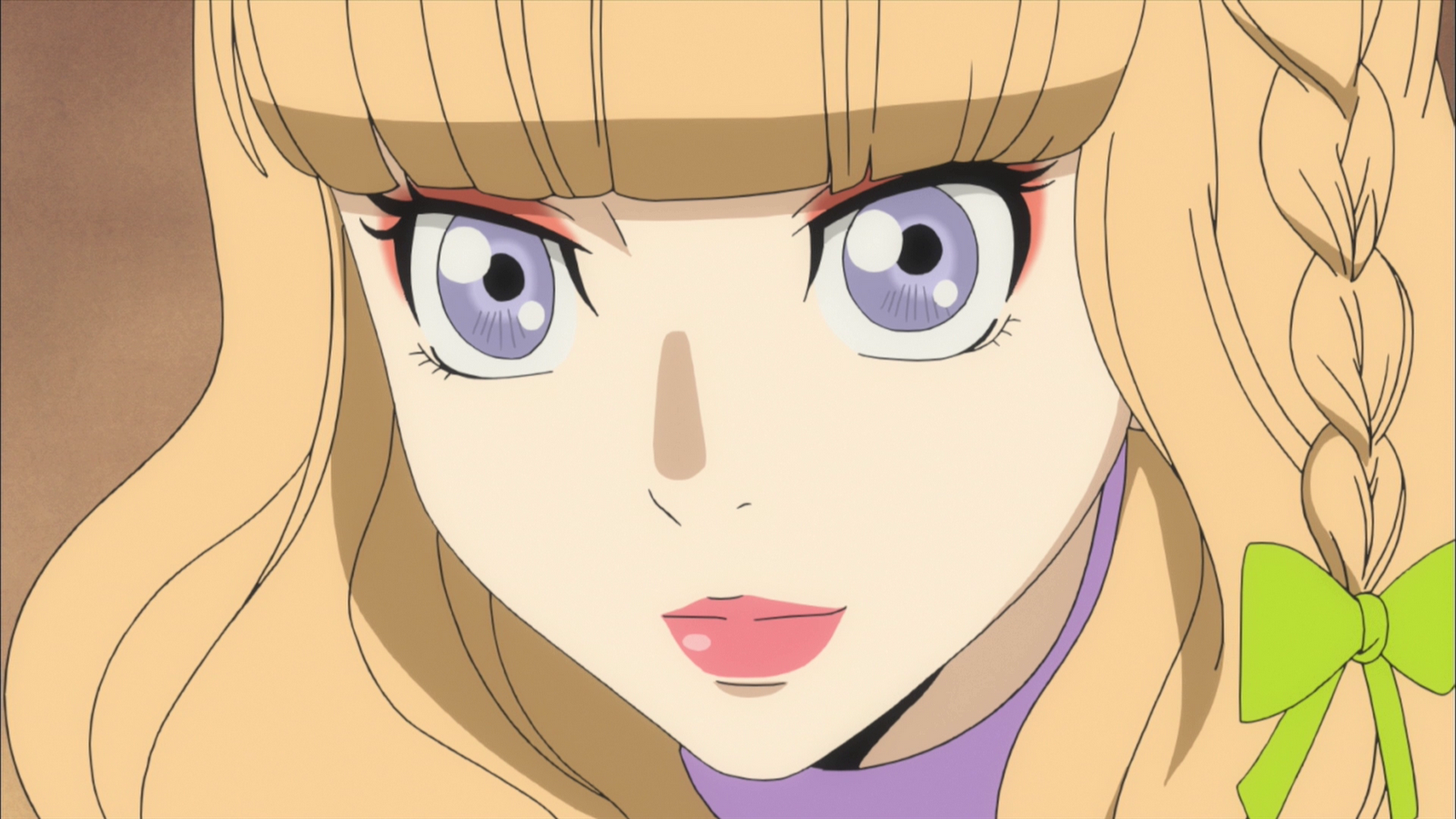
Naturally, most screen time however is given to the female "nuns" and they're a varied bunch. The main character, Tsukimi, is a jellyfish otaku; although this is a rather obscure subject to form an obsession around, it works because any hobbyist can see parts of themselves in her behaviour, lighting up whenever the topic turns towards marine life and reciting useless jellyfish trivia at every opportunity. She's adorable. Living with her are a train otaku, a traditional Japanese clothing otaku, a Three Kingdoms otaku, a quiet girl obsessed with older men and a celebrated manga artist who neither leaves her room nor speaks. Each of the geeks is uniquely weird - and somehow uniquely unattractive to the opposite sex.
The quirkiness of the cast provides fertile material for jokes, and even the non-otaku characters are hilarious in their own ways. I laughed out loud on more than one occasion at the perceptive interplay between them. Princess Jellyfish is more than a gag series though; it also has an ongoing story, which manages to keep its momentum and reach a satisfying conclusion without relying on a second series which never comes, as so many anime do. The show also packs an emotional punch when it introduces some surprising romantic twists.
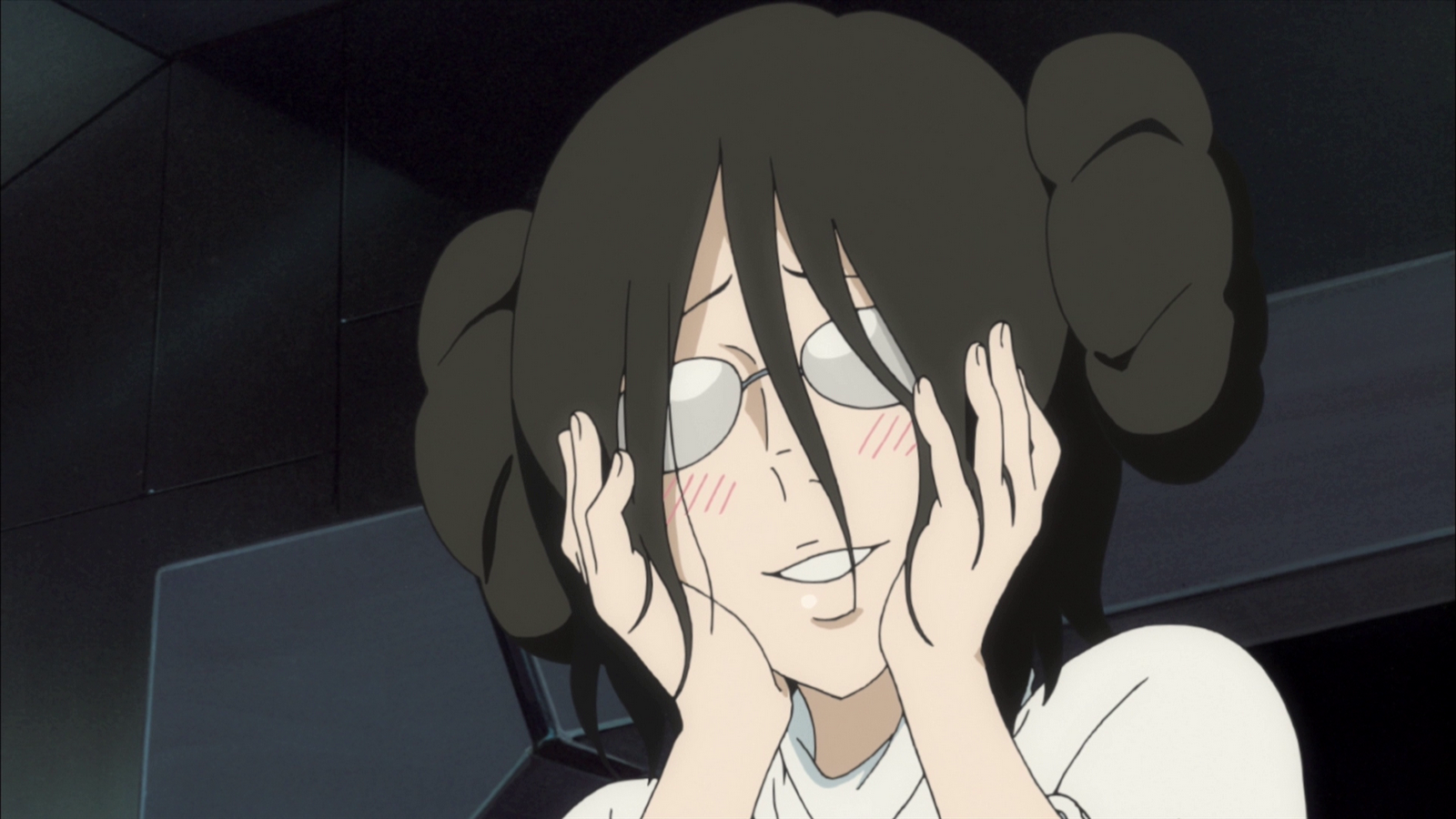
Even though it was obvious from the beginning that I was going to like Princess Jellyfish, I was taken by surprise by how addictive it was - I ended up watching most episodes back to back in a marathon because I kept wanting to see what was going to happen next. It's a shame that the older female demographic in the UK is so disinterested in animation because most 'normal' women I know would love watching this if they only knew that it existed. I might buy a second copy to give to my mother for Christmas!

Friday, 2 November 2012
Butai Sengoku Basara 3 ~Setouchi Kyouran~ early reports
I'm in the wrong country so I can't enjoy any of this first hand, but here's a small collection of reports from the current new Sengoku Basara stage play which debuted in Japan earlier today. It seems to have been very well received if the reaction from the fans online can be trusted!
Series producer KobaP (Kobayashi Hiroyuki) tweeted a picture of how the empty event hall looked before the fans arrived. The Tokyo Dome City Hall is quite spacious! I bet it looks smaller on the DVD (hopefully there'll be a similar picture of Osaka's Theater Brava when the stage show moves west for comparison).
4gamer.net posted some great shots of the staff and cast, also covering the announcements from earlier in a presentation. Muneshige looks pretty good in his costume!
Entertainment website Crank-In has also contributed some pictures, this time of the actual performance. The scene(s?) with Mouri and Kingo look as though they'll be fun to watch when the DVD comes, and the creepy handshake between Tsuruhime and Gyoubu is magnificent.
That's all for now on the new stage play.
To make today perfect, my deputy service finally confirmed receipt of my copy of Sengoku Basara HD Collection this afternoon. I had originally ordered the game back at the start of May this year at Amazon, then I cancelled the order and placed it via a deputy when it was announced that Amazon orders would not be accompanied by the first press bonus CD. The game came out at the end of August - back then I was so excited that I was ready to pay for express delivery - yet days turned to weeks with no sign of it. After months had passed the deputy company agreed it was never going to turn up and two weeks ago they ordered a replacement. It's now looking as though I might actually get to play it before Christmas after all!
I cannot believe how long it has taken; it's been so long that in the interval I've imported and read quite a few lengthy hand-drawn doujinshi based on that first press bonus CD without having being able to listen to the original audio. Relying on deputy services where your order might not be their top priority is tough, but it's a necessity sometimes.
Series producer KobaP (Kobayashi Hiroyuki) tweeted a picture of how the empty event hall looked before the fans arrived. The Tokyo Dome City Hall is quite spacious! I bet it looks smaller on the DVD (hopefully there'll be a similar picture of Osaka's Theater Brava when the stage show moves west for comparison).
4gamer.net posted some great shots of the staff and cast, also covering the announcements from earlier in a presentation. Muneshige looks pretty good in his costume!
Entertainment website Crank-In has also contributed some pictures, this time of the actual performance. The scene(s?) with Mouri and Kingo look as though they'll be fun to watch when the DVD comes, and the creepy handshake between Tsuruhime and Gyoubu is magnificent.
That's all for now on the new stage play.
To make today perfect, my deputy service finally confirmed receipt of my copy of Sengoku Basara HD Collection this afternoon. I had originally ordered the game back at the start of May this year at Amazon, then I cancelled the order and placed it via a deputy when it was announced that Amazon orders would not be accompanied by the first press bonus CD. The game came out at the end of August - back then I was so excited that I was ready to pay for express delivery - yet days turned to weeks with no sign of it. After months had passed the deputy company agreed it was never going to turn up and two weeks ago they ordered a replacement. It's now looking as though I might actually get to play it before Christmas after all!
I cannot believe how long it has taken; it's been so long that in the interval I've imported and read quite a few lengthy hand-drawn doujinshi based on that first press bonus CD without having being able to listen to the original audio. Relying on deputy services where your order might not be their top priority is tough, but it's a necessity sometimes.
News roundup: Takarazuka's Sengoku Basara is confirmed
There's always so much to report when it comes to Sengoku Basara updates.
The main news for today is that the leaked information from Capcom was correct: the famous Takarazuka Revue will be performing a musical play based on Sengoku Basara in the new year (English press release here). The play will be staged by the Revue's Hanagumi and star Ranju Tomu and Ranno Hana, running from June to July in Shibuya's Tokyu Theatre Orb. Tickets go on general sale in April. I have some mild concerns about how some of the costumes will translate to the reasonably dignified Takarazuka format, but overall this is very exciting news. I wonder if they'll stick to the game melodies for the music or incorporate themes from the anime as well? It's difficult to decide which I want more: a beautiful otokoyaku playing Uesugi Kenshin, or a light-hearted story about Ootomo Sourin singing his way through feudal Japan.
The 'Basarazuka' announcement was timed to coincide with the first performance of Butai Sengoku Basara 3 ~Setouchi Kyouran~. It will be a long time before I can see the Butai show for myself, so in the meantime Capcom have kindly released details of the special stage play merchandise to drive fans further into a frenzy. The two stars of the Setouchi region look fantastic in their costumes. As always some items will sell ludicrously quickly and it looks as though they're initially only on sale to those people lucky enough to have a ticket for the show already. There's also a notice on the official stage play website which advises that visitors to the performance can reserve the DVD version when they attend in order to receive special photograph goods.
On the bright side, typing this did at least remind me to check the status of the Tiger & Bunny The Live home video release. It's coming out sooner than I thought on the 22nd November; I must preorder!
 Back to the SenBasa news, yesterday brought us the cover art for the fourth volume of the popular Gakuen Basara anthology manga series and I like the unusual layout a lot more than the previous book's cover. Gakuen Basara 4 is available through any store which carries Japanese books and comes out next week on the 8th November, priced at 1,029 yen.
It looks as though Spring will be a good time to be a SenBasa fan as today Capcom also announced Sengoku Basara Magazine, a premium publication with a lot of special content. More details are due later in the month in Dengeki Maou. There will also be some new Kodansha Box Sengoku Basara 3 novel releases coming up.
That's not all, as Spring will also see the next live event: Basara Matsuri 2013 ~Haru No Jin~ over the weekend of the 30th and 31st of March 2013. The venue this time will be the Ryougoku Kokugikan sumo hall. Guests announced so far are Morita Masakazu (Maeda Keiji), Hoshi Souichirou (Sanada Yukimura), Okiayu Ryoutarou (Toyotomi Hideyoshi) and Ishino Ryuuzou (Chousokabe Motochika). I'm scrambling to check my funds...
It looks as though the next wave of information will be at the end of November, when the follow-ups to most of these announcements are scheduled. Today is also notable for being the day that most applicants for Winter Comiket (FuyuKomi) hear whether or not they will be able to have a space at the event, so to say that the overall SenBasa fan demographic is buzzing with excitement would be no exaggeration.
The other general news is that Sengoku Basara 3 Utage is receiving a priced-down release in Japan on 13th December, just in time for Christmas. On PS3, it's joining the "Playstation 3 The Best" budget line while the Wii version is moving to the "Best Price!" label. Utage is a fantastic game, and even more fantastic at a lower price point. If you wanted more after playing the English adaptation of Sengoku Basara 3 (Samurai Heroes), but were worried about the language barrier importing its standalone expansion, it's now become affordable enough to banish those fears, right?
Finally, the Sengoku Basara fan club "Eiyuu No Kai" (affectionately referred to as "Hideo No Kai" by certain fans) will finally be releasing its second printed newsletter imminently. It's going to contain reports on various events as well as details of an exclusive event DVD. This blog won't be reporting on any of this material directly as it's intended for fan club members only, but on a personal note I'm looking forward to receiving it - as well as paying the EMS shipping fees. The things we do for love.
The main news for today is that the leaked information from Capcom was correct: the famous Takarazuka Revue will be performing a musical play based on Sengoku Basara in the new year (English press release here). The play will be staged by the Revue's Hanagumi and star Ranju Tomu and Ranno Hana, running from June to July in Shibuya's Tokyu Theatre Orb. Tickets go on general sale in April. I have some mild concerns about how some of the costumes will translate to the reasonably dignified Takarazuka format, but overall this is very exciting news. I wonder if they'll stick to the game melodies for the music or incorporate themes from the anime as well? It's difficult to decide which I want more: a beautiful otokoyaku playing Uesugi Kenshin, or a light-hearted story about Ootomo Sourin singing his way through feudal Japan.
The 'Basarazuka' announcement was timed to coincide with the first performance of Butai Sengoku Basara 3 ~Setouchi Kyouran~. It will be a long time before I can see the Butai show for myself, so in the meantime Capcom have kindly released details of the special stage play merchandise to drive fans further into a frenzy. The two stars of the Setouchi region look fantastic in their costumes. As always some items will sell ludicrously quickly and it looks as though they're initially only on sale to those people lucky enough to have a ticket for the show already. There's also a notice on the official stage play website which advises that visitors to the performance can reserve the DVD version when they attend in order to receive special photograph goods.
On the bright side, typing this did at least remind me to check the status of the Tiger & Bunny The Live home video release. It's coming out sooner than I thought on the 22nd November; I must preorder!

It looks as though Spring will be a good time to be a SenBasa fan as today Capcom also announced Sengoku Basara Magazine, a premium publication with a lot of special content. More details are due later in the month in Dengeki Maou. There will also be some new Kodansha Box Sengoku Basara 3 novel releases coming up.
That's not all, as Spring will also see the next live event: Basara Matsuri 2013 ~Haru No Jin~ over the weekend of the 30th and 31st of March 2013. The venue this time will be the Ryougoku Kokugikan sumo hall. Guests announced so far are Morita Masakazu (Maeda Keiji), Hoshi Souichirou (Sanada Yukimura), Okiayu Ryoutarou (Toyotomi Hideyoshi) and Ishino Ryuuzou (Chousokabe Motochika). I'm scrambling to check my funds...
It looks as though the next wave of information will be at the end of November, when the follow-ups to most of these announcements are scheduled. Today is also notable for being the day that most applicants for Winter Comiket (FuyuKomi) hear whether or not they will be able to have a space at the event, so to say that the overall SenBasa fan demographic is buzzing with excitement would be no exaggeration.
The other general news is that Sengoku Basara 3 Utage is receiving a priced-down release in Japan on 13th December, just in time for Christmas. On PS3, it's joining the "Playstation 3 The Best" budget line while the Wii version is moving to the "Best Price!" label. Utage is a fantastic game, and even more fantastic at a lower price point. If you wanted more after playing the English adaptation of Sengoku Basara 3 (Samurai Heroes), but were worried about the language barrier importing its standalone expansion, it's now become affordable enough to banish those fears, right?
Finally, the Sengoku Basara fan club "Eiyuu No Kai" (affectionately referred to as "Hideo No Kai" by certain fans) will finally be releasing its second printed newsletter imminently. It's going to contain reports on various events as well as details of an exclusive event DVD. This blog won't be reporting on any of this material directly as it's intended for fan club members only, but on a personal note I'm looking forward to receiving it - as well as paying the EMS shipping fees. The things we do for love.
Subscribe to:
Posts (Atom)